
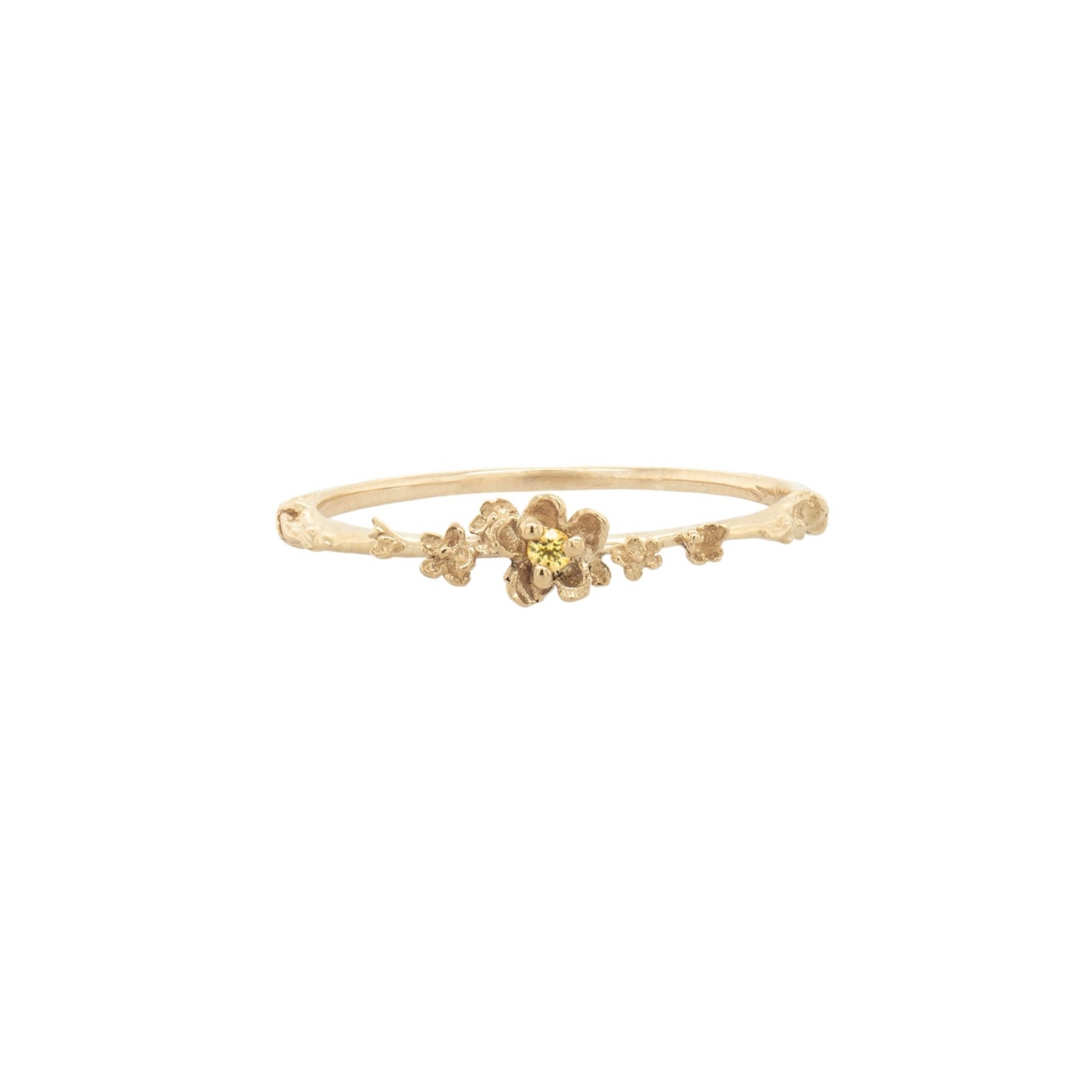
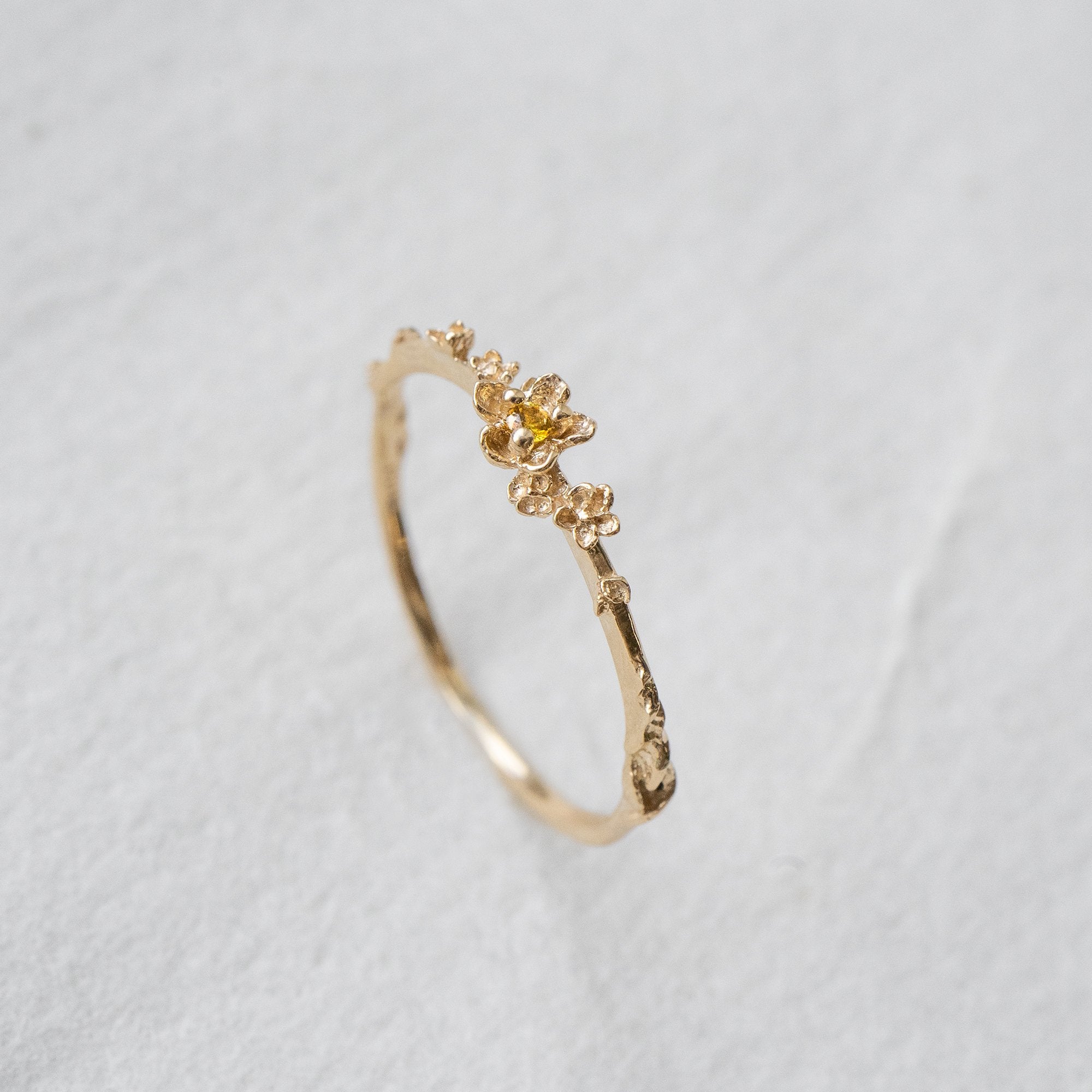
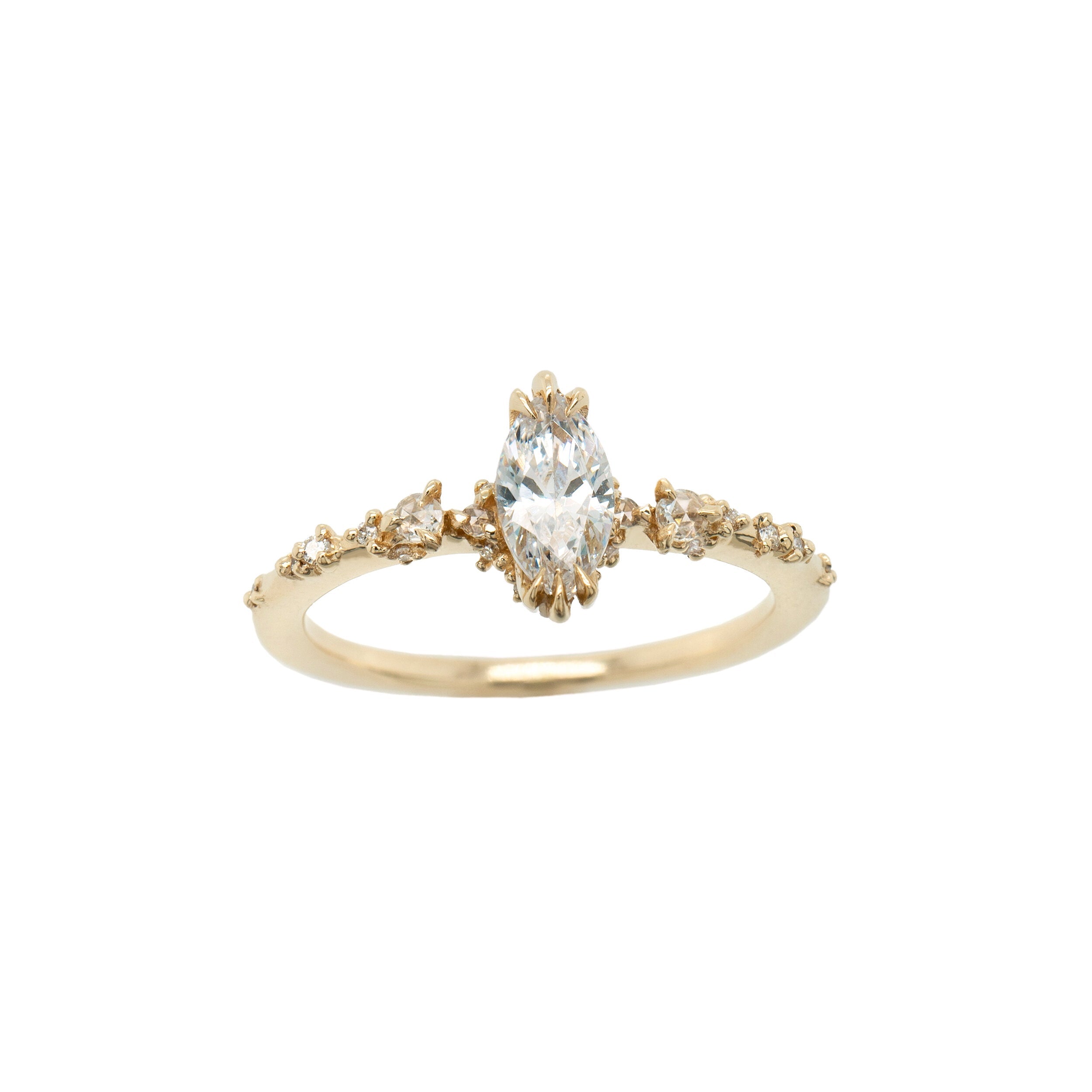
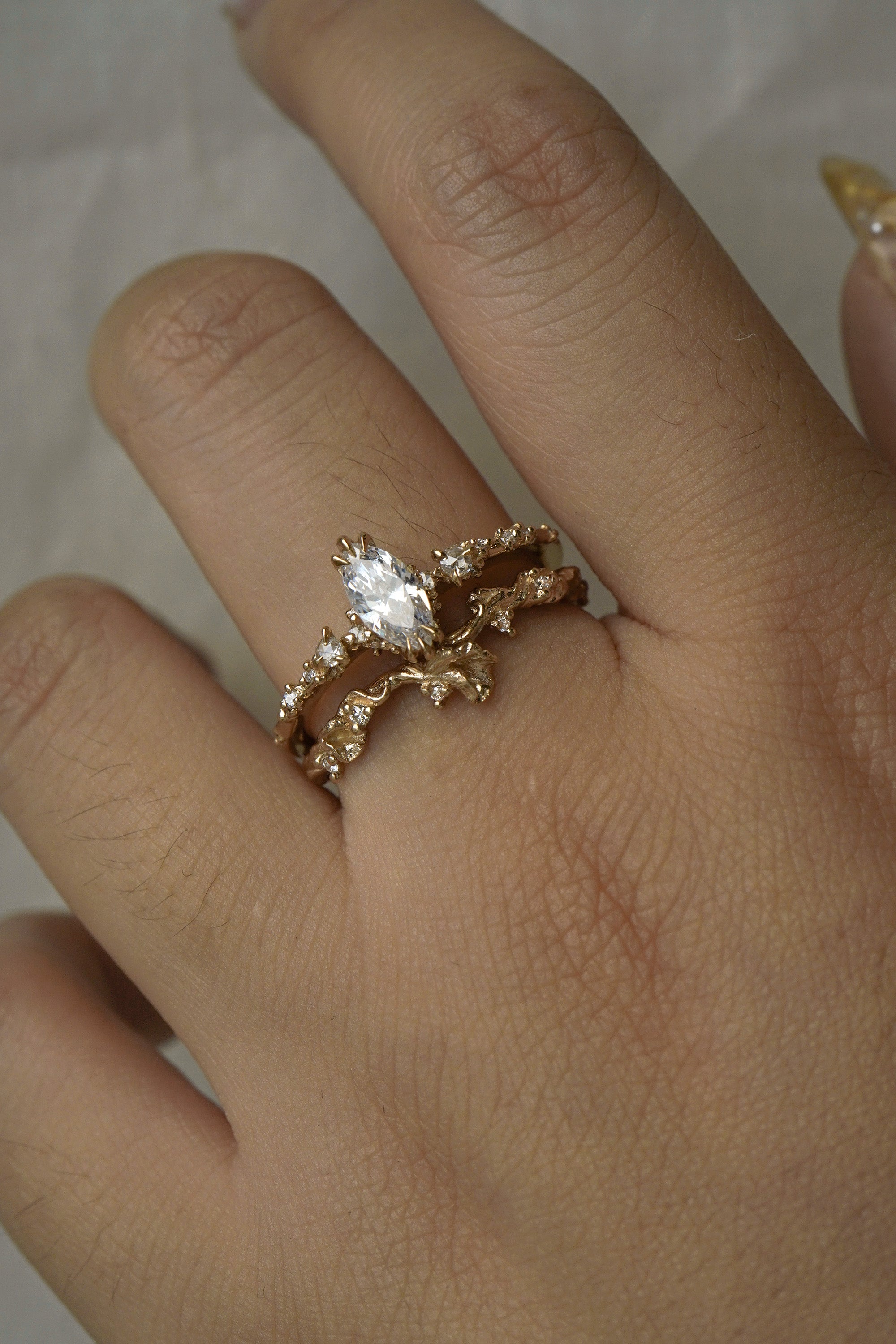
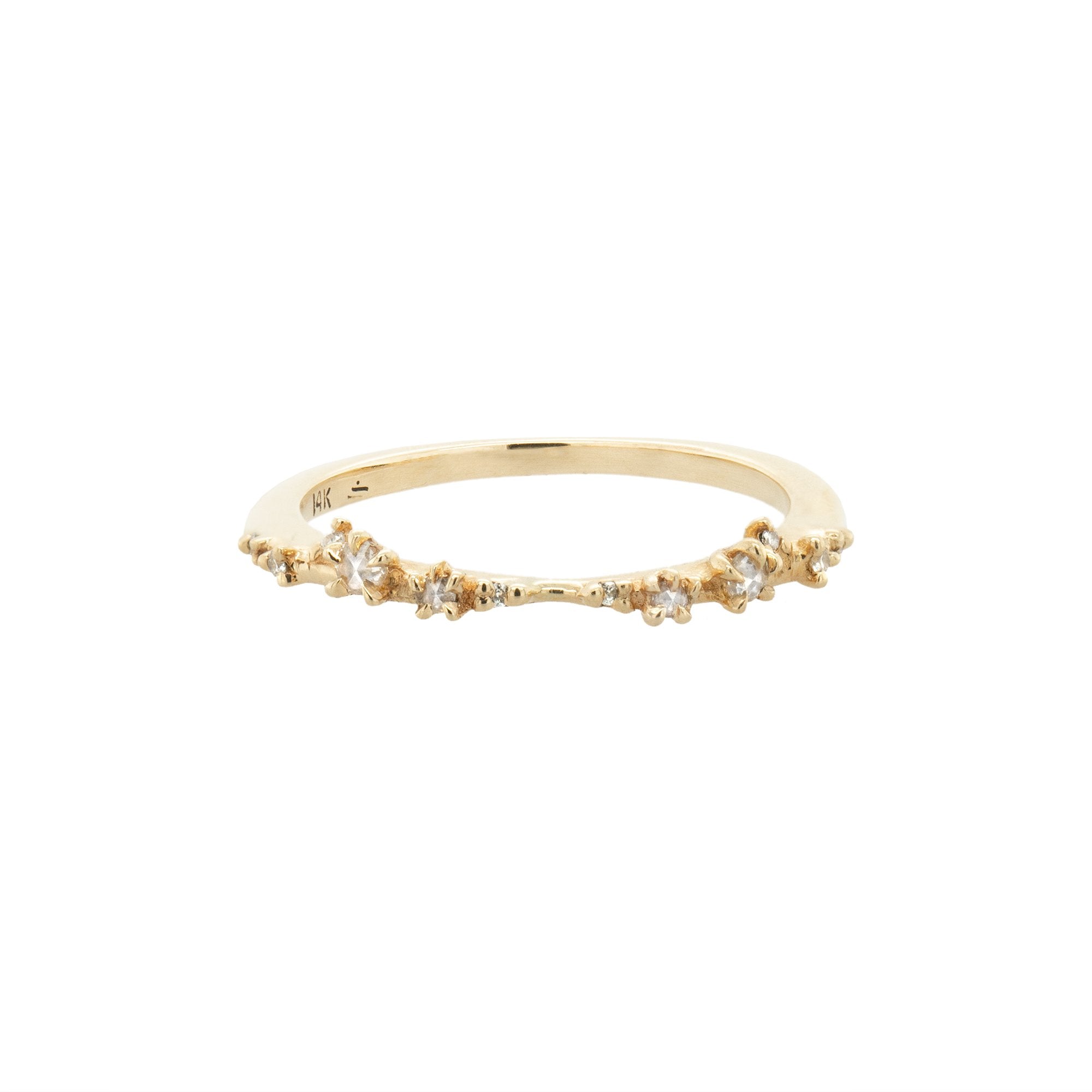
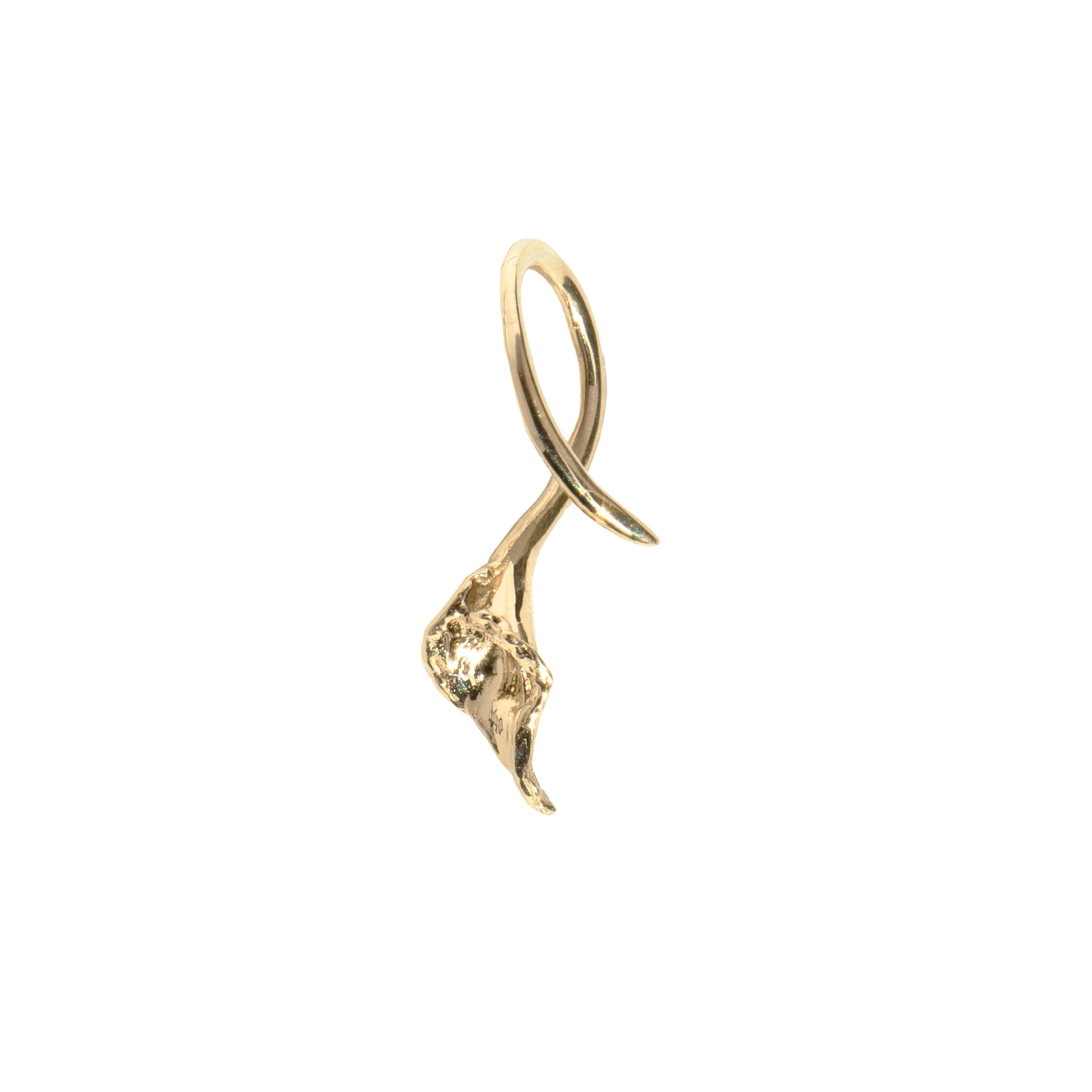
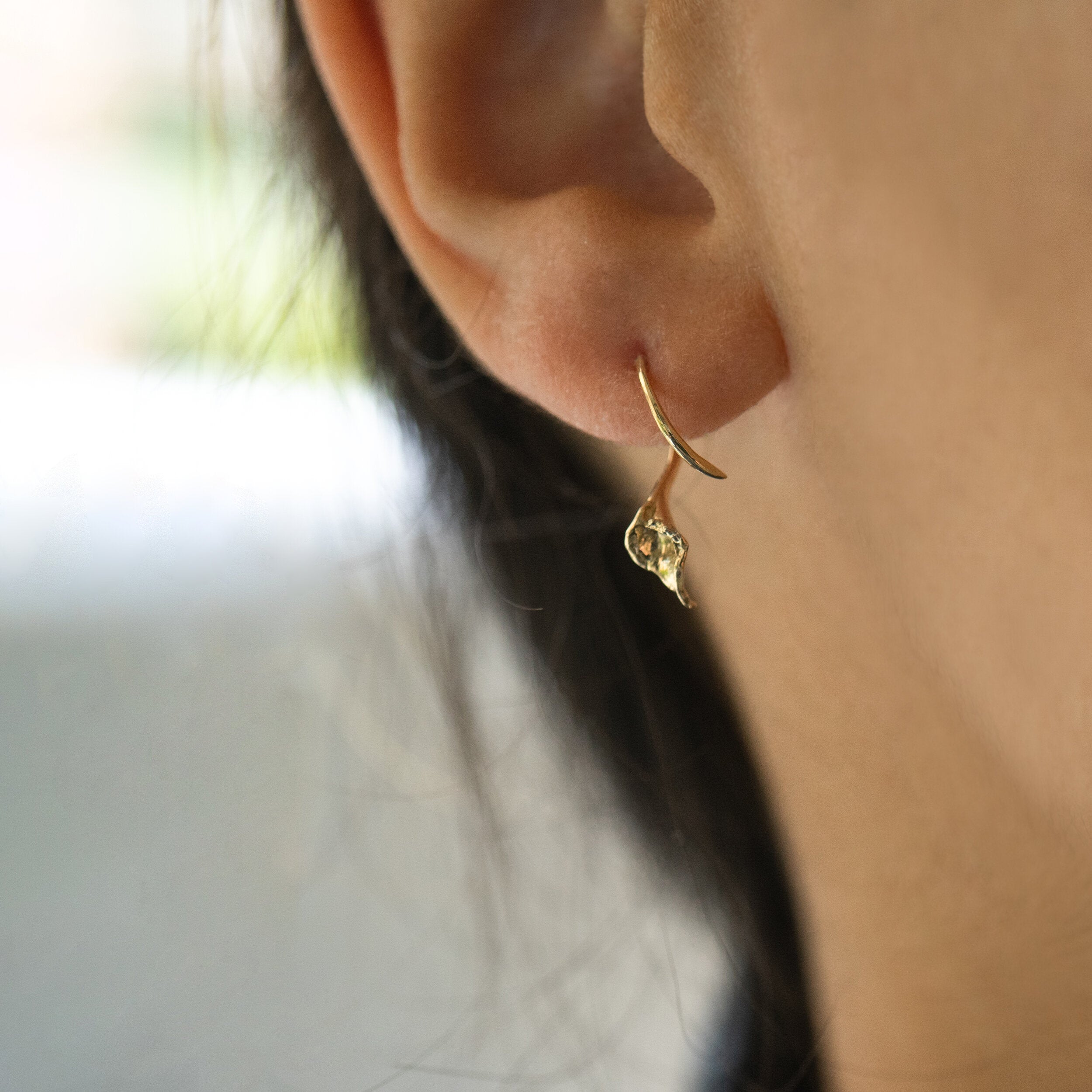
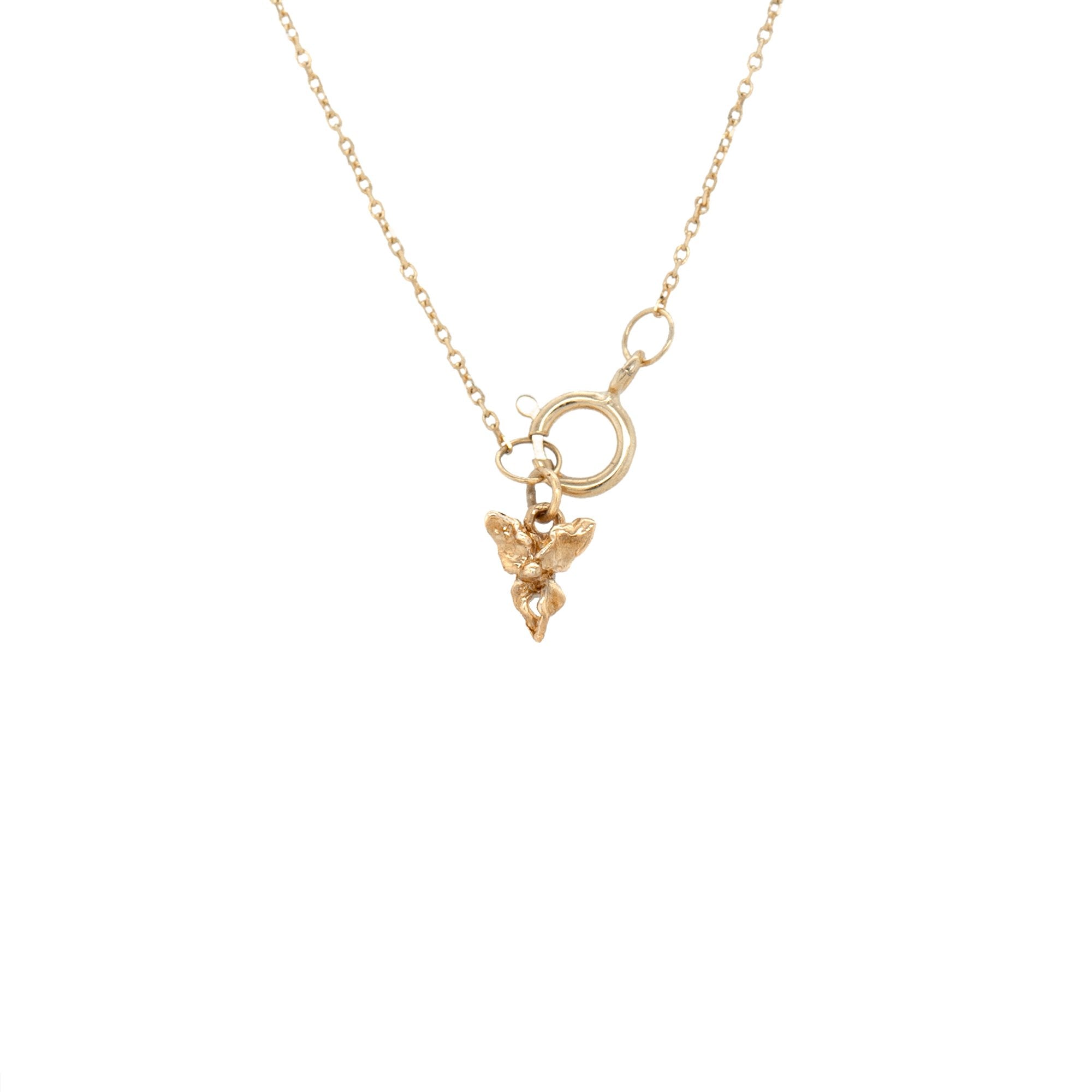
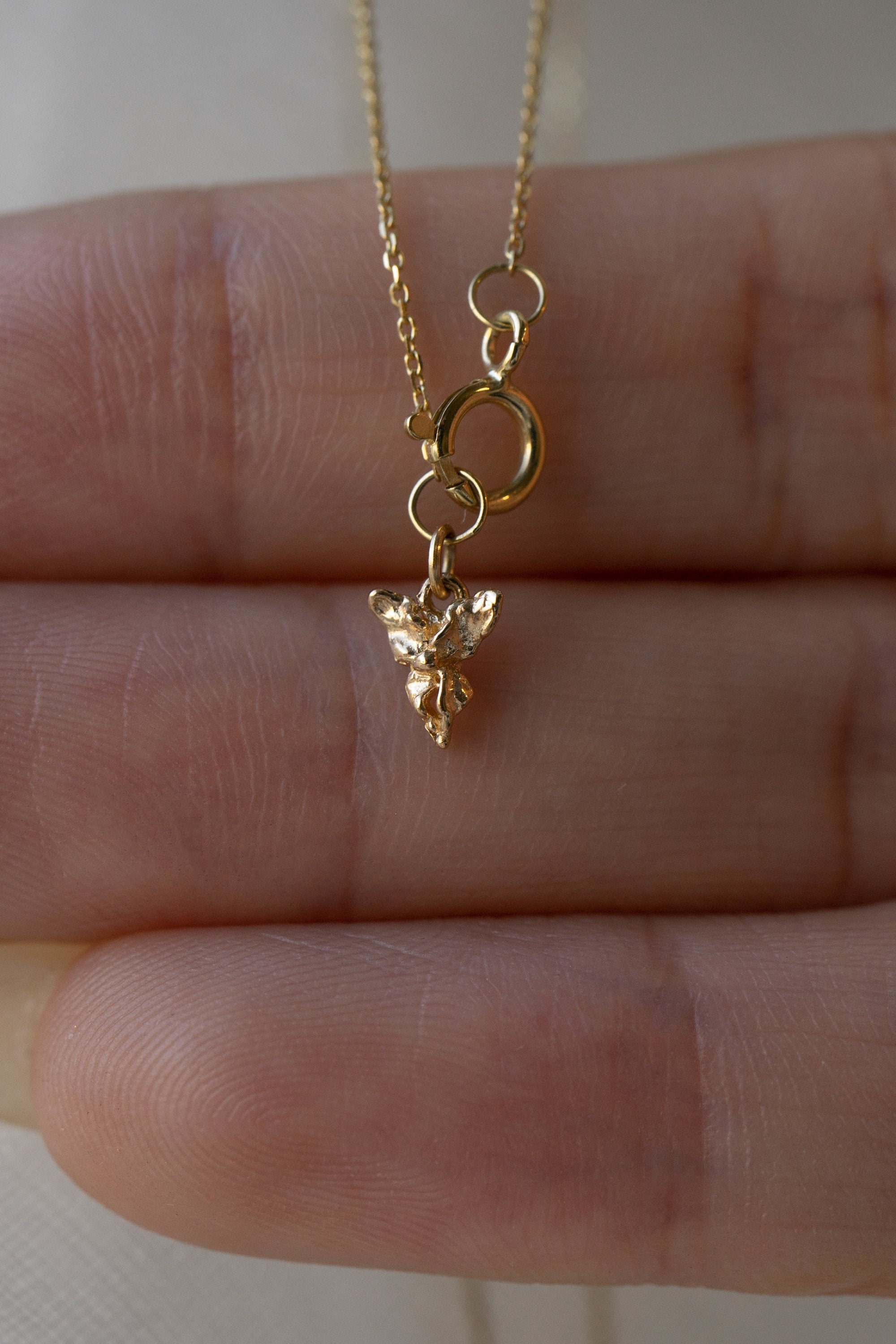


Champagne gold is the quietest of our metals, and one of our favourites. It's a custom alloy mixed exclusively for Laurie Fleming Jewellery; a soft, romantic hue that lives somewhere between yellow and rose, with a cooler cast that makes it a perfect neutral. It looks the way it sounds: gentle, antique, and a little dreamy. If you’ve ever been curious about this special alloy, here’s everything you need to know.
The Short Answer
Champagne gold is our signature 14k gold alloy, custom-mixed just for us. The colour sits between yellow gold and rose gold, but with a cooler, dustier tone that reads as warm-neutral rather than pink or buttery. The effect is antique and softly glowing; the kind of gold that looks like it was unearthed rather than made.
Some important things to know about champagne gold: it’s only offered in 14k (more about gold karats here), it contains a small amount of nickel, only certain styles can be made in champagne gold. More on each of those below.
What Gives Champagne Gold Its Colour
The colour of any gold alloy comes down to what you mix into the pure gold. Pure 24k gold is too soft to wear daily, so it's always alloyed with other metals to give it strength. Those other metals are also what shift the colour. Copper warms gold toward pink. Silver and palladium cool it toward white. The proportions, and the specific metals chosen, are what make one 14k yellow gold look honey-bright and another look paler and more lemon.
Alloy Breakdown
In 14k gold, 58.5% of the metal is pure gold by weight. The other 41.5% is the alloy: a blend of other metals chosen by the studio or refinery mixing the gold. That alloy is where colour, hardness, and skin compatibility all get decided. (Learn everything you need to know about gold alloys here).
In our 14k yellow gold, the alloy is mostly copper and silver, leaning warm. In our 14k rose gold, the proportion of copper is much higher, which is what gives rose its pink blush. In white gold, palladium or nickel is added to neutralise the yellow.
14k Champagne gold sits in its own category. The Champagne gold alloy uses a balance of metals that softens the yellow without pushing it toward pink, and adds a slight cool undertone so the whole thing reads as gently antique rather than buttery or warm. The result is a colour that's hard to find anywhere else, and it's the reason we have it mixed just for us.
Why Ours Looks Different
Most "champagne" or "antique" gold alloys you'll see elsewhere are really just slightly desaturated yellow gold, or rose gold mixed at lower copper levels. Ours is its own recipe, developed for the look we wanted in our florals and fairy pieces: a gold that doesn't compete with a stone, that flatters opalescent and silky sapphires especially well, and that picks up the muted tones in mother of pearl. It tends to glow rather than flash, which suits the rest of the collection.
It's also, we think, one of the most flattering golds on a wide range of skin tones, because the neutral cast means it isn't fighting with cool or warm undertones the way a strong yellow or strong rose sometimes can.
Champagne Gold vs. Rose Gold vs. Yellow Gold
The easiest way to picture the difference is side by side. Here's how the three compare across the things we usually get asked about.
|
Yellow Gold (14k) |
Rose Gold (14k) |
Champagne Gold (14k) |
|
|---|---|---|---|
|
Colour |
Warm, honey-bright, classic gold |
Pink to peach, depending on the alloy |
Soft warm-neutral, between yellow and rose, slightly cooler |
|
Best with |
Most stone colours; very flexible |
Pink, peach, and warm-toned sapphires; warm diamonds |
Opalescent and silky sapphires, mother of pearl, antique-feeling stones |
|
Reads as |
Traditional, sunny, unmistakably gold |
Modern, soft, romantic |
Antique, ethereal, slightly mysterious |
|
Contains nickel |
No |
No |
Yes (a small amount) |
|
Availability at LFJ |
Across the collection |
Across the collection |
Select pieces |
If you have a nickel allergy, yellow and rose gold are both safe choices. Champagne and white gold both contain small amounts of nickel to give the alloy a softer, more muted hue. If you've worn and loved both yellow and rose and can't choose between them, Champagne gold is often the answer, as long as you don’t have any allergies! It rests at a beautiful midpoint between the two that can tie them together wonderfully.
Will Champagne Gold Leave Black Marks on My Skin?
This is the question we get most often about Champagne gold, and the honest answer is: probably not, but it depends on your skin and what you wear it with.
Most people wear Champagne gold without any reaction at all. It's solid 14k gold, with a small amount of nickel in the alloy for colour and structure. The nickel content is well within standard fine jewellery thresholds, and the gold itself doesn't tarnish or oxidise. If you've worn 14k white gold before without any issues, you're very likely to wear Champagne gold the same way.
That said, black marks on skin under any solid gold ring are a real thing, and they happen for a few different reasons. Most of the time it isn't an allergic reaction at all, but a chemical interaction between gold alloys, certain skincare or cleaning products, and the natural oils on your skin. We've written about this in more detail in our skin discolouration blog post, which is worth a read if you've ever had this happen with a piece of solid gold jewellery before.
If you have a known nickel allergy, please don't choose Champagne gold. It contains nickel, and even a small amount can trigger a reaction in someone who's sensitive. We'd suggest yellow or rose gold (both nickel-free at LFJ), or get in touch with the studio about palladium white gold or platinum, which are both excellent choices for nickel-sensitive skin.
How to Care for Champagne Gold Jewellery
Champagne gold is solid 14k gold, so it's cared for the same way as the rest of your fine jewellery. There's no special coating, no plating that can wear off, and nothing about the alloy that makes it more delicate than yellow or rose gold of the same karat.
A few habits will keep any of our pieces looking their best, Champagne gold included. Take rings off before swimming, gardening, working out, doing the dishes, or applying lotions, perfume, and sunscreen. Chlorine and harsh chemicals are hard on gold over time, and skincare residue is the most common cause of dullness. Store pieces individually in a soft pouch or a lined box so they aren't rubbing against each other (gold scratches gold). For everyday cleaning, warm water and a tiny drop of unscented soap with a soft brush is all most pieces need. Rinse, pat dry with a lint-free cloth, and you're done.
A few things to skip: ultrasonic cleaners with delicate stones (especially opals, pearls, mother of pearl, and any stone with significant inclusions), harsh jewellery dips, and anything abrasive. If a piece has gone properly dull or scratched, get in touch with the studio for a polish rather than trying to buff it yourself.
The finish on Champagne gold is high and mirror-like when it's new. Over years of wear it will soften into a gentler patina, which we honestly love. One of the reasons solid gold is worth the investment is that it ages beautifully. If you want it brought back to its original shine at any point, our polishing service can do that.
Shop Champagne Gold
Champagne gold is offered on a select range of rings and bands, both ready-to-ship and made-to-order. It isn't currently available for earrings, necklaces, or made-to-order Asrai Garden rings, for technical and aesthetic reasons specific to those pieces. If you have your heart set on a piece that doesn't list Champagne gold as an option, get in touch and we'll let you know whether it's possible and provide a quote.
A few favourites: The White Wisp Band is one of our most-loved stacking pieces, and looks particularly ethereal in Champagne gold. The Pearl Blossom Ring pairs petite freshwater pearls with the soft warmth of the alloy in a way that's quietly magical. The Sapphire Cyndra Ring, Supreme takes a selection of teal sapphires and lets the Champagne gold bring them to life. And the Daphne Band is a beautiful introduction if you want a single Champagne gold piece to wear alongside your existing stack.
Shop the full Champagne gold collection →
FAQs
Is Champagne gold real gold?
Yes. Champagne gold is solid 14k gold, meaning 58.5% pure gold by weight. The remaining 41.5% is the alloy that gives it its colour. It isn't plated, coated, or filled.
Does Champagne gold tarnish?
Broadly speaking, no. Solid gold doesn't tarnish, but certain metals in an alloy can oxidize (darken when exposed to air) over time, and can get a sort of antique patina, particularly in recessed areas and cracks. It usually takes gold a very long time to oxidize (barring external influences), so you will most often see this in antique and vintage pieces. Like all gold, it can pick up surface scratches and dullness over time from everyday wear, but a polish brings it back. There's no risk of the Champagne gold colour changing or wearing through to another metal underneath.
Is Champagne gold the same as antique gold or rose gold?
No. "Antique gold" usually refers to a finish (a slightly oxidised or matte look on top of a standard gold alloy), and rose gold is a separate alloy with significantly more copper, giving it a bright, pinkish hue. Champagne gold is its own custom alloy, mixed for us, with a colour that sits between yellow and rose but reads cooler than either.
Can I get an engagement ring in Champagne gold?
Yes, for many of our engagement ring styles, though not all. Made-to-order Asrai Garden rings aren't currently offered in Champagne gold, but most of our other engagement ring styles can be made in it. If you don't see Champagne gold as an option on the product page, please get in touch and we'll let you know what's possible.
Will Champagne gold match my existing yellow or rose gold pieces?
It will sit beautifully alongside both without matching either exactly. People often layer Champagne gold with yellow or rose stacks on purpose, because the slight tonal contrast is part of the appeal. If you want a precise match to an existing piece, choose the same alloy as the one you already wear.
How long does a Champagne gold piece take to make?
Pieces made in champagne gold can take an additional two weeks to craft on top of our standard production timelines, especially during busy periods. Most made-to-order pieces take roughly 4-6 weeks, and engagement rings have a production lead time of about 6–8 weeks from the time the order is placed. That means that for most champagne gold pieces, they will take 8-10 weeks to make, at most.
Can I see Champagne gold in person before ordering?
Yes, and we'd love to show it to you! Book an appointment at our 919 Queen West flagship, and we'll have a few Champagne gold pieces out so you can see how it reads in natural light alongside our yellow, rose, and white golds. If you’re not local to Toronto, get in touch and we’d be happy to share additional photos, videos, and recommendations for you.